What Is the Importance of Nitrogen Fixation in the Environment?
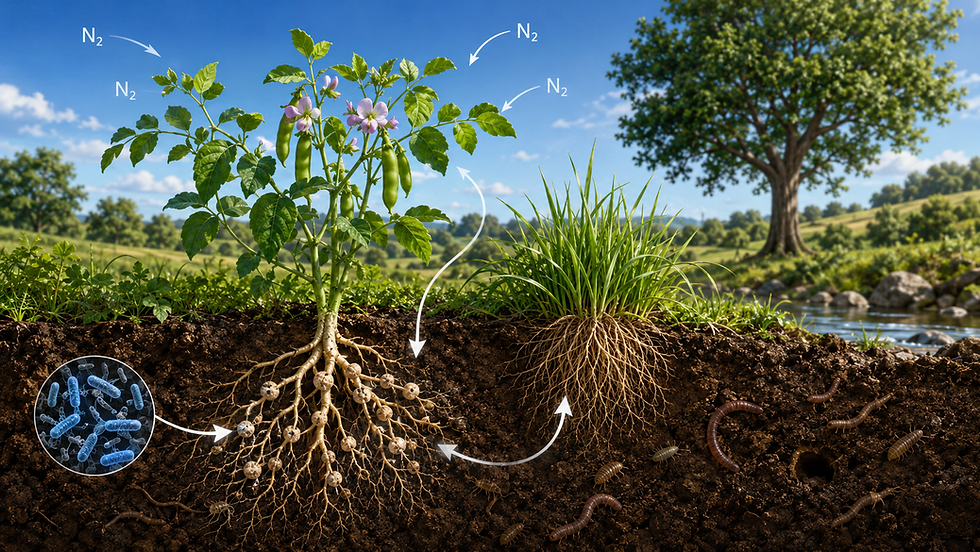
Nitrogen fixation is one of the most important natural processes that keeps life moving on Earth. Nitrogen is present all around us in the atmosphere, but most plants and animals cannot use it directly in its gaseous form. Around 78% of Earth’s atmosphere is nitrogen gas, yet this form is mostly unavailable to living organisms until it is converted into biologically useful compounds.
This conversion process is called nitrogen fixation. It changes atmospheric nitrogen into usable forms such as ammonia, ammonium, nitrates, or related nitrogen compounds. In natural ecosystems, this work is mainly done by nitrogen-fixing microorganisms, especially bacteria found in soil, water, and plant root zones.
Nitrogen fixation is not only important for farming. It is essential for forests, grasslands, wetlands, rivers, oceans, wildlife habitats, soil formation, and the global nitrogen cycle. Without it, plants would struggle to grow, food chains would weaken, and ecosystems would lose their natural balance.
Nitrogen Fixation Connects the Atmosphere to Living Systems
The atmosphere contains a huge store of nitrogen, but nitrogen gas has a strong triple bond that makes it chemically stable. Because of this, plants cannot simply absorb nitrogen gas from the air. They need nitrogen in a reactive form that their roots can take up.
Nitrogen-fixing bacteria solve this problem naturally. They convert nitrogen gas into plant-usable forms. Some bacteria live freely in soil, while others live in association with plant roots. Symbiotic bacteria, such as rhizobia, live inside root nodules of legumes and convert nitrogen into ammonium that the plant can use for proteins, chlorophyll, enzymes, and nucleic acids.
This process creates a natural bridge between the air and the biosphere. It allows nitrogen to enter plants, then animals, then soil organic matter, and finally back into the wider nitrogen cycle.
It Supports Plant Growth and Natural Productivity
Plants need nitrogen to build proteins, enzymes, chlorophyll, DNA, and RNA. Without enough usable nitrogen, plants show weak growth, pale leaves, poor root development, and low biomass. In natural environments, nitrogen fixation helps maintain plant productivity without depending only on external nutrient inputs.
In forests, grasslands, wetlands, and agricultural soils, nitrogen-fixing microorganisms help increase the amount of available nitrogen. This supports healthy plant growth, which then supports insects, birds, grazing animals, decomposers, and soil organisms.
This is why nitrogen fixation is directly connected to food webs. Healthy plants provide food and shelter for many organisms. When plants grow well, the entire ecosystem becomes more active and stable.
It Improves Soil Fertility Naturally
Soil fertility is not only about adding nutrients. It is about maintaining a living system where minerals, organic matter, microorganisms, moisture, roots, and nutrients work together. Nitrogen fixation contributes to this system by adding biologically available nitrogen to the soil.
When nitrogen-fixing microbes grow, interact with roots, or decompose after completing their life cycle, nitrogen becomes part of the soil nutrient pool. This nitrogen can later be used by plants or converted by other soil microorganisms through nitrification, ammonification, and other nitrogen cycle steps.
This makes nitrogen fixation especially important in low-fertility soils, degraded lands, and ecosystems where synthetic fertilizer is not applied. It helps rebuild soil nutrient status slowly and naturally.
It Reduces Dependence on Synthetic Nitrogen Fertilizers
Synthetic nitrogen fertilizers have helped increase food production worldwide, but their overuse can create environmental problems. When nitrogen is applied in excess or at the wrong time, it may leach into groundwater, run off into rivers, or escape into the air as nitrogen-based gases.
The U.S. EPA notes that nitrogen and phosphorus losses from fields can affect downstream water quality, contribute to eutrophication, create hypoxic “dead zones,” and increase harmful algal blooms. It also notes that nitrous oxide is a potent greenhouse gas.
Biological nitrogen fixation can reduce the pressure to depend heavily on synthetic nitrogen inputs. It does not mean fertilizers are never needed, but it supports a more balanced and sustainable nutrient system.
It Helps Maintain the Balance of the Nitrogen Cycle
The nitrogen cycle includes nitrogen fixing bactreia, assimilation, ammonification, nitrification, and denitrification. Nitrogen fixation is the entry point that brings atmospheric nitrogen into living systems. Without this step, the cycle would not supply enough usable nitrogen for plants and microorganisms.
However, balance is important. Too little usable nitrogen limits plant growth and soil productivity. Too much reactive nitrogen can pollute air, water, and soil. UNEP explains that excess reactive nitrogen can pollute water and air, degrade soils, contribute to algal blooms, and affect climate and ecosystems.
Natural nitrogen fixation works best as part of a balanced ecosystem. It adds nitrogen gradually through biological activity instead of creating sudden nutrient overloads. This is one reason it is considered environmentally valuable.
It Supports Biodiversity
Nitrogen fixation supports biodiversity by improving plant growth in nutrient-poor environments. Some ecosystems, such as early-stage forests, restored lands, grasslands, and wetlands, depend strongly on nitrogen-fixing plants and microbes to build fertility over time.
When nitrogen becomes available naturally, more plant species can survive. More plant diversity then supports more insects, birds, mammals, fungi, and microorganisms. In this way, nitrogen fixation helps create stronger habitat networks.
It is also important for ecological restoration. In degraded soils, nitrogen-fixing plants and microbes can help restart nutrient cycling. This makes the soil more suitable for future plant growth and long-term ecosystem recovery.
It Plays a Role in Climate and Carbon Storage
Nitrogen fixation also connects with the carbon cycle. Plants need nitrogen to grow, and growing plants absorb carbon dioxide through photosynthesis. When nitrogen is available in the right amount, plants can produce more biomass, build roots, and contribute organic matter to soil.
More root biomass and plant residue can support soil carbon storage. Healthy soils with active microbial communities often hold more organic matter, which improves structure, water retention, and biological activity.
This does not mean nitrogen fixation alone can solve climate change. But it is part of the natural nutrient foundation that allows plants and soils to function properly.
It Supports Sustainable Agriculture and Natural Ecosystems Together
A major benefit of nitrogen fixation is that it works in both managed and natural systems. In agriculture, it supports crops, reduces chemical input pressure, and improves soil health. In natural environments, it maintains ecosystem productivity, biodiversity, and nutrient cycling.
For microbial research and agriculture-focused solutions, companies such as Universal Microbes focus on beneficial microorganisms that support soil and environmental applications. The bigger environmental value of nitrogen fixation is that it works with biology instead of depending only on external chemical inputs.
Why Nitrogen Fixation Matters Today
Modern agriculture and land use have disturbed the natural nitrogen balance. Some regions face nitrogen deficiency and soil degradation, while others suffer from nitrogen pollution due to excessive fertilizer use. FAO states that improper nitrogen use can damage air, water, and soil quality, contribute to biodiversity loss, and worsen climate change.
This makes nitrogen fixation more important than ever. It offers a natural way to support soil fertility, reduce nutrient waste, improve ecosystem resilience, and move toward more sustainable nutrient management.
Nitrogen fixation is important because it converts unusable atmospheric nitrogen into forms that plants and ecosystems can use. It supports plant growth, soil fertility, biodiversity, food chains, carbon storage, and the natural nitrogen cycle.
Scientifically, it is one of the key processes that connects air, soil, plants, microbes, animals, and the environment. Environmentally, it helps reduce pressure on synthetic fertilizers and supports healthier ecosystems. For long-term sustainability, nitrogen fixation is not just a soil process; it is a foundation of life on Earth.


Comments